Cart
0
0.00 zł

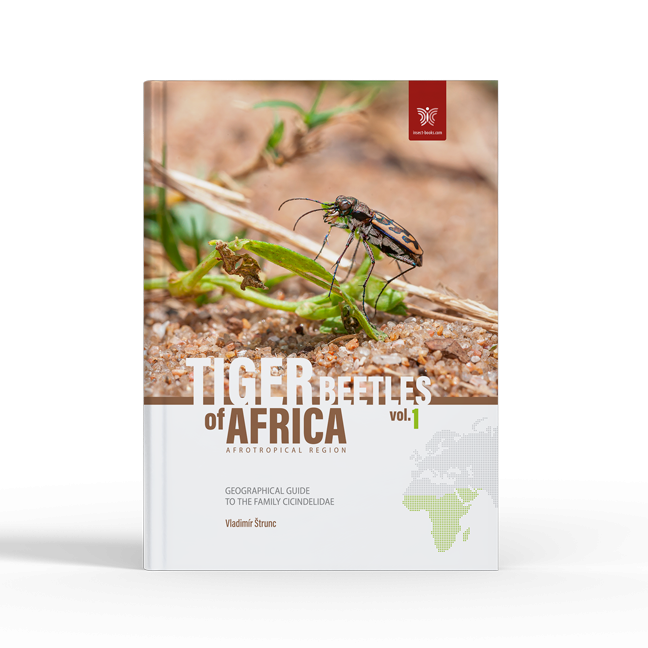
The book "Ground Beetles of Africa (2nd edition) " offers a comprehensive guide to these amazing insects, which specifically includes 860 species from approximately 170 genera, detailed information on their habitats, behaviour and distribution. Written by experts in the field, this book is a valuable resource for entomologists, collectors, and nature lovers interested in learning more about these magnificent creatures. ISBN: 978-80-907980-3-8 Author: Vladimir Strunc Insect-Books
One of Earth's Most Diverse and Ecologically Important Beetle Families
Order: Coleoptera | Suborder: Adephaga
The family Carabidae, commonly known as ground beetles, represents one of the largest and most successful beetle families on Earth, comprising more than 40,000 described species distributed across all continents except Antarctica. These beetles belong to the suborder Adephaga and have evolved into a remarkably diverse group that has captured the attention of entomologists worldwide, earning them the affectionate nickname "walking jewels" due to the striking metallic coloration exhibited by many species.
Most carabids display a characteristic body plan featuring elongated forms with prominent, long legs adapted for rapid running. Size variation is substantial across the family, ranging from diminutive species measuring less than 2 millimeters to impressive specimens exceeding 60 millimeters in length. The majority of species exhibit dark coloration, typically shiny black or brown, though numerous species display brilliant iridescent hues of metallic green, blue, bronze, or copper.
Key Characteristic: Carabidae possess enlarged basal leg segments (coxae and trochanters) on their rear legs, with trochanters on the underside partially covering several abdominal segments—a distinctive feature that separates them from superficially similar darkling beetles (Tenebrionidae).
The elytra, or hardened wing covers, typically display prominent longitudinal ridges and grooves, creating distinctive patterns that aid in species identification. A particularly notable feature of many carabid species is the reduction or complete fusion of the hind wings, rendering numerous species flightless. This evolutionary adaptation has played a significant role in species diversification through increased geographic isolation.
As members of the Adephaga, carabids possess paired pygidial glands in the lower abdomen capable of producing noxious or caustic secretions for defense. The bombardier beetles, found in subfamilies Paussinae and Brachininae, have evolved these glands into sophisticated chemical weapons that explosively eject boiling-hot defensive compounds with a distinctive popping sound.
Identification of ground beetles requires attention to several morphological characteristics that distinguish them from other beetle families. The following features serve as reliable identification markers when examining suspected carabid specimens.
The head structure provides important diagnostic characters. Carabids possess 11-segmented antennae that are filiform (thread-like) and not clubbed at the end. The antennae lack the distinct ridge on the head that characterizes darkling beetles. Large, prominent mandibles are clearly visible and indicate the predaceous nature of most species. Many species display large compound eyes, particularly pronounced in diurnal hunters such as tiger beetles (Cicindelinae).
The thorax (pronotum) is typically prominent and narrower than the abdomen in most species, though considerable variation exists across different genera. The shape, width, and sculptural details of the thorax often serve as critical species-level identification characters. Some specialized genera, such as Scaphinotus, possess unusually long, narrow heads adapted for extracting snails from their shells.
Versus Tenebrionidae (Darkling Beetles): Carabids have enlarged basal leg segments on their hind legs, while darkling beetles lack these. Additionally, darkling beetles possess a distinct ridge where antennae attach, which carabids lack.
Versus Staphylinidae (Rove Beetles): Carabids have fully developed elytra covering the abdomen, whereas rove beetles have shortened elytra exposing most abdominal segments.
Carabid larvae are elongate and campodeiform (active, mobile form) with relatively large heads bearing distinct, curved chewing mouthparts. The head capsule is well-sclerotized and clearly separated from the body segments. They possess a pair of prominent tail appendages (cerci) and well-developed legs. Larvae dwell in soil organic litter or topsoil and can be identified by their active, predaceous behavior and characteristic body form.
Ground beetles demonstrate remarkable ecological versatility, occurring in virtually every terrestrial habitat across the globe. The family's cosmopolitan distribution reflects its ancient origins and successful adaptive radiation over millions of years.
Carabidae exhibit a truly worldwide distribution with significant species diversity across all major biogeographic regions. The Palaearctic region hosts more than 10,000 species, while North America contains approximately 2,000 species and Europe harbors around 2,700 species. Recent molecular phylogenetic research indicates that the subfamily Carabinae originated in the Americas during the late Jurassic to late Cretaceous period, subsequently dispersing to achieve global distribution through both ancient continental drift and more recent transoceanic dispersal events.
The family's explosive radiation and diversification occurred approximately 40 to 50 million years ago, coinciding with the collision of the Indian subcontinent with the Eurasian landmass. This geological event appears to have catalyzed major evolutionary innovation within the group. Species diversity follows expected latitudinal gradients, with tropical regions supporting higher diversity than temperate zones, though carabids remain abundant and ecologically significant in boreal and temperate ecosystems.
Carabids occupy diverse microhabitats, though most species show preferences for moist, cool environments with adequate ground cover. Common habitats include the interface zones under bark, beneath logs, among leaf litter, and in soil crevices. Riparian zones along ponds and rivers support specialized assemblages adapted to periodically flooded conditions. Forest ecosystems, from tropical rainforests to boreal coniferous forests, harbor particularly rich carabid communities with vertical stratification from soil surface to forest canopy.
Agricultural landscapes and grasslands support important carabid populations that play significant roles in pest control. Some species have adapted to human-modified environments, though intensive agriculture with frequent tillage and pesticide application typically reduces both abundance and diversity. Cave systems worldwide host specialized trechine beetles that have evolved remarkable adaptations to subterranean existence, including loss of eyes and pigmentation.
Ground beetles serve as excellent bioindicators of environmental change and habitat quality due to their abundance, taxonomic resolution, and sensitivity to habitat modification. They have proven valuable for assessing the effects of climate change, land use practices, and habitat fragmentation on terrestrial ecosystems.
The behavioral ecology of Carabidae reveals sophisticated adaptations for hunting, reproduction, and survival across diverse environments. These beetles display complex behaviors that have evolved in response to predation pressure, resource availability, and environmental variability.
Most carabid species are nocturnal, with approximately 60 percent of species active at night and only 20 percent strictly diurnal in well-studied regions such as the United Kingdom. Nocturnal species tend to be larger than their diurnal counterparts. Some species exhibit crepuscular activity patterns, being most active during twilight hours. Interestingly, activity patterns can vary within populations, with individual Carabus auratus beetles showing diurnal, nocturnal, or arrhythmic activity preferences.
The notable exception to nocturnality occurs in tiger beetles (Cicindelinae), which are active diurnal hunters relying on excellent vision. These beetles rank among the fastest land animals relative to body size, achieving speeds of 9 kilometers per hour. Their hunting strategy contrasts sharply with most carabids, which rely on rapid running and tactile or chemical cues rather than visual hunting.
Despite possessing wings, most carabid species are reluctant or unable to fly. Many species have fused elytra with reduced or absent hind wings, rendering them permanently flightless. This adaptation has profoundly influenced their biogeography and speciation patterns. In species retaining flight capability, wing use is strongly influenced by environmental conditions including temperature, precipitation, and wind.
Some species exhibit wing polymorphism, with both long-winged (macropterous) and short-winged (brachypterous) forms occurring within populations. Environmental conditions influence the expression of these morphs, with long-winged individuals typically more common in ephemeral habitats where dispersal capability confers selective advantage. In certain species, flight muscles undergo seasonal breakdown during egg production and subsequent resynthesis, representing a remarkable physiological adaptation balancing reproduction and dispersal.
Carabids employ sophisticated search strategies characteristic of invertebrate predators. After encountering prey in a patch, their search behavior intensifies for a species-specific period before abandoning the area if no additional prey is located. This area-concentrated search pattern optimizes energy expenditure while exploiting clustered prey distributions.
Chemical cues play important roles in prey location for many species, with demonstrated ability to detect chemical signals from springtails, mollusks, and aphids. Some species, such as those in the genus Promecognathus, have evolved remarkable specializations, including the ability to prey on cyanide-producing millipedes by countering their hydrogen cyanide defenses.
Ground beetles occupy crucial positions in terrestrial food webs, functioning primarily as predators but with important exceptions that broaden their ecological significance.
The overwhelming majority of carabid species are carnivorous, actively hunting invertebrate prey. Their diet encompasses a broad spectrum of soil-dwelling and surface-active invertebrates including caterpillars, fly larvae and pupae, beetle grubs, earthworms, aphids, slugs, and snails. Their formidable mandibles enable them to overpower and consume prey items, with some species capable of eating several times their body weight daily.
Both larval and adult stages are typically predaceous, though dietary breadth may differ between life stages due to the larvae's more restricted search range in soil environments. Female beetles often display more varied diets than males, correlating with nutritional demands of egg production.
Herbivorous Exceptions: A minority of species, particularly in the genus Zabrus and various Harpalus and Amara species, feed on seeds and plant material. These granivorous species play important roles in weed seed predation in agricultural systems.
Carabids provide substantial ecosystem services, particularly in agricultural contexts where they function as biological control agents. Their consumption of crop pest larvae, eggs, and adults helps regulate pest populations naturally. Notable examples include Lebia grandis, which preys heavily on Colorado potato beetle eggs and larvae, and various Calosoma species (caterpillar hunters) that consume large numbers of Lepidopteran larvae.
Weed seed predation represents another significant ecosystem service. Studies have demonstrated that carabid consumption of weed seeds can substantially reduce weed recruitment in agricultural fields, contributing to what researchers term "many little hammers" approach to integrated weed management. This service is particularly valuable in organic and reduced-tillage farming systems.
Beyond their role as predators, carabids serve as prey for various vertebrate predators including birds, small mammals, amphibians, and reptiles. Their defensive secretions provide some protection, but they remain important food sources for many insectivorous species. Some specialized carabid lineages have evolved as ant or termite associates, while others have become obligate ectoparasitoids of other insects, demonstrating the family's remarkable ecological diversity.
Carabidae undergo complete metamorphosis (holometaboly), progressing through four distinct developmental stages: egg, larva, pupa, and adult. This developmental strategy allows for ecological niche separation between immature and adult stages.
Reproductive timing varies among species, with traditional classifications distinguishing spring-breeding from autumn-breeding species, though this dichotomy has proven overly simplistic given substantial intraspecific variation in reproductive phenology. Mating occurs when males locate receptive females, with both sexes typically engaging in multiple matings during the breeding season.
Female beetles deposit eggs individually in soil or cavities within surface plant residue, with clutch sizes ranging from 30 to over 600 eggs per female lifetime depending on species. Eggs are oblong and laid in protected microhabitats, which is critical given that newly hatched larvae have limited mobility and soft, vulnerable bodies. Some species exhibit parental care behaviors including egg guarding and seed caching to provision emerging larvae.
Upon hatching, larvae emerge with characteristic campodeiform morphology featuring elongated bodies, well-developed legs, and prominent mandibles. Most species undergo three larval instars, though some genera including Harpalus and Amara complete development in two instars. Specialized lineages associated with ants, termites, or serving as ectoparasitoids may have additional larval stages with reduced mobility in later instars.
Larvae dwell primarily underground in soil or organic litter, actively hunting soft-bodied invertebrates and their eggs. The larval feeding period typically lasts two to four weeks, during which growth progresses through successive molts. Species are sometimes categorized as having winter or summer larvae based on the season of peak larval activity.
The final larval instar constructs a pupal chamber in soil, commonly several centimeters beneath the surface. Pupae are initially pale yellow to brown, becoming darker as adult structures develop. The pupal stage is non-feeding and relatively immobile, though some species retain limited mobility. Duration of pupation varies with temperature and species.
Most species complete development from egg to adult in approximately one year, though larger species and those experiencing suboptimal conditions may require multiple years. Some species have evolved facultative diapause mechanisms allowing larvae to synchronize their life cycles with favorable environmental conditions.
Adult ground beetles can be remarkably long-lived for insects, with many species surviving two to four years under favorable conditions. Laboratory studies have documented survival up to four years for some species. The majority of species overwinter as adults in soil or sheltered sites, emerging in spring to reproduce. This overwintering strategy contributes to their abundance in temperate ecosystems and their value as natural pest control agents.
Carabids demonstrate remarkable ecological flexibility, occupying terrestrial habitats from tropical rainforests to arctic tundra. Most species are cursorial predators, hunting on soil surfaces and in leaf litter. Their predominantly nocturnal lifestyle reduces desiccation risk and predation exposure while maximizing encounter rates with nocturnal prey species.
Microhabitat selection shows strong associations with humidity and temperature preferences. Species compositions shift along environmental gradients, with different assemblages characterizing forest interiors versus edges, agricultural versus natural habitats, and lowland versus montane environments. This habitat specificity makes carabids valuable indicators of habitat quality and environmental change.
Behavioral adaptations include sophisticated defensive mechanisms ranging from rapid escape running to chemical warfare via pygidial gland secretions. Social behaviors remain relatively simple, with most species exhibiting solitary lifestyles except during brief mating periods. However, some species aggregate in favorable overwintering sites, and specialized ant-associated species have evolved complex interactions with their hosts.
The global distribution of Carabidae reflects their ancient evolutionary origins and subsequent radiation across continents. The family occurs on all continents except Antarctica, with major diversity centers in temperate and tropical regions. North America hosts approximately 2,000 species, while Europe contains around 2,700 species. The Palaearctic region overall supports more than 10,000 described species.
Molecular phylogenetic analyses indicate that the subfamily Carabinae originated in the Americas during the late Jurassic to late Cretaceous period (approximately 200 to 65 million years ago). Subsequent dispersal events, both through ancient continental connections prior to Gondwana's breakup and more recent transoceanic flights, established populations globally. The collision of the Indian subcontinent with Eurasia approximately 40 to 50 million years ago correlates with explosive radiation and diversification of major carabid lineages.
Island biogeography studies have revealed patterns consistent with classic island biogeographic theory, with species richness correlating strongly with island area while showing more complex relationships with isolation. Carabids have successfully colonized oceanic islands, with wing polymorphism facilitating colonization of remote locations. Some species have been transported intercontinentally through human activities, establishing populations far from their native ranges.
Vertical distribution extends from sea level to high mountain peaks, with specialized montane species occupying alpine habitats above treeline. Cave systems worldwide host specialized trechine beetles showing remarkable convergent evolution of troglomorphic features including eye reduction, loss of pigmentation, and elongated appendages.
Lovei, G. L., and K. D. Sunderland. 1996. Ecology and behavior of ground beetles (Coleoptera: Carabidae). Annual Review of Entomology 41: 231-256.
Lindroth, C. H. 1961-1969. The ground-beetles (Carabidae, excluding Cicindelinae) of Canada and Alaska. Opuscula Entomologica Supplementum.
Thiele, H. U. 1977. Carabid Beetles in Their Environments: A Study on Habitat Selection by Adaptations in Physiology and Behaviour. Springer-Verlag, Berlin.
Larochelle, A. 1990. The Food of Carabid Beetles (Coleoptera: Carabidae, including Cicindelinae). Fabreries Supplement 5.
Erwin, T. L. 2007. A Treatise on the Western Hemisphere Caraboidea (Coleoptera): Their Classification, Distributions, and Ways of Life. Volume 1. Pensoft Publishers, Sofia-Moscow.
Lorenz, W. 2005. Systematic list of extant ground beetles of the world (Insecta Coleoptera "Geadephaga": Trachypachidae and Carabidae incl. Paussinae, Cicindelinae, Rhysodinae). Second Edition. Tutzing, Germany.
Luff, M. L. 2007. The Carabidae (ground beetles) of Britain and Ireland. Handbooks for the Identification of British Insects, Volume 4, Part 2. Royal Entomological Society, London.
Homburg, K., et al. 2014. Carabids.org – a dynamic online database of ground beetle species traits (Coleoptera, Carabidae). Insect Conservation and Diversity 7: 195-205.
Kromp, B. 1999. Carabid beetles in sustainable agriculture: a review on pest control efficacy, cultivation impacts and enhancement. Agriculture, Ecosystems and Environment 74: 187-228.
Kotze, D. J., et al. 2011. Forty years of carabid beetle research in Europe – from taxonomy, biology, ecology and population studies to bioindication, habitat assessment and conservation. ZooKeys 100: 55-148.